Table of Contents
TogglePulp Fiction Review
Quentin Tarantino's Groundbreaking Crime Masterpiece
Pulp Fiction Review - Quentin Tarantino's revolutionary crime film redefined modern cinema with its nonlinear storytelling. Two hitmen, a boxer, a gangster's wife, and diner robbers collide in interconnected tales of violence and redemption. This 1994 masterpiece brought fresh energy to independent filmmaking.
Released on October 14, 1994, the film earned $213 million worldwide against an $8 million budget. It won the Palme d'Or at Cannes and received seven Oscar nominations. The film's commercial success revolutionized independent cinema distribution.
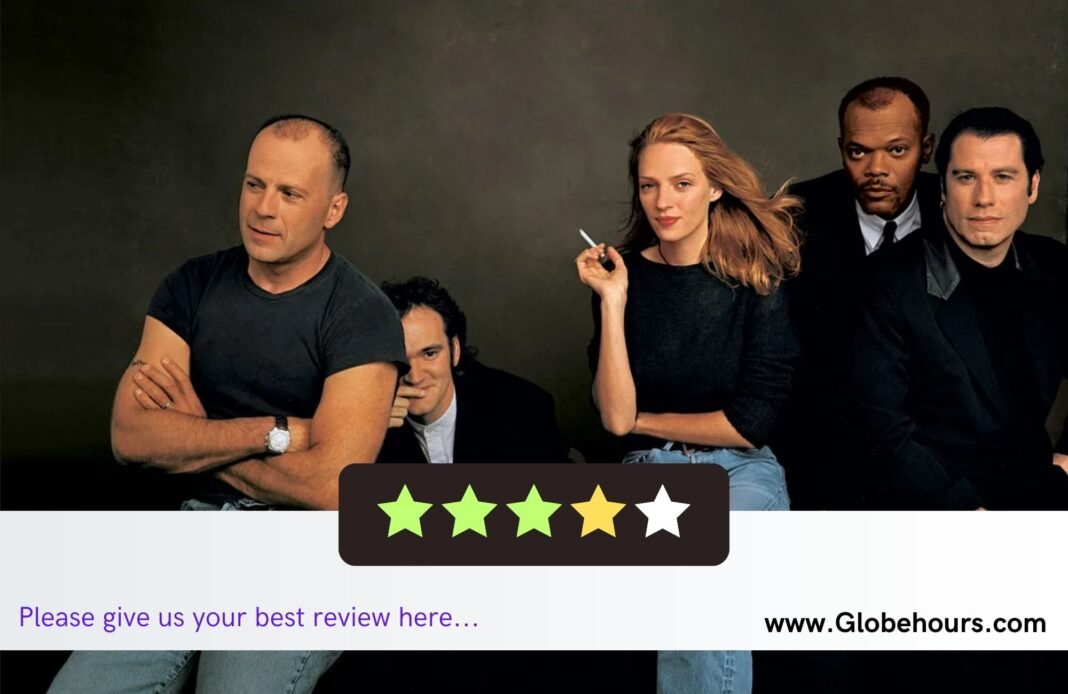
John Travolta's career was reinvigorated by his portrayal of hitman Vincent Vega. Samuel L. Jackson and Uma Thurman delivered career-defining performances. Tarantino's sharp dialogue and eclectic soundtrack became instantly iconic.
| Movie Details | Information |
|---|---|
| Director | Quentin Tarantino |
| Release Date | October 14, 1994 (US) |
| Rating | R (Graphic Violence, Strong Language) |
| Genre | Crime / Drama / Thriller |
| Runtime | 2 hours 34 minutes |
| Worldwide Gross | $213 Million |
| Production | Miramax Films |
| IMDb | View on IMDb |
📖 Plot Synopsis
Pulp Fiction weaves four interrelated stories of crime in Los Angeles. The narrative unfolds out of chronological order, creating a puzzle-like structure. Each segment features different protagonists navigating the criminal underworld.
Vincent Vega and Jules Winnfield work as hitmen for crime boss Marsellus Wallace. They retrieve a mysterious briefcase while discussing mundane topics like French hamburgers. Their seemingly routine assignment takes unexpected turns.
Vincent must escort Marsellus's wife Mia for an evening without incident. Their night at a retro diner leads to a near-fatal overdose. Meanwhile, boxer Butch Coolidge plans to flee after double-crossing Marsellus in a fixed fight.
Diner robbers Pumpkin and Honey Bunny frame the opening and closing scenes. Their amateur heist intersects with Jules and Vincent's story. The film concludes where it began, revealing Jules's spiritual transformation.
🎬 Pulp Fiction Review: Direction & Style
Tarantino's direction showcases audacious confidence throughout. The nonlinear structure keeps audiences engaged and attentive. His visual style combines 1970s crime films with modern sensibilities.
Cinematographer Andrzej Sekuła shot the film on slow film stock for a lustrous, grain-free image. The aesthetic evokes 1950s Technicolor while maintaining contemporary edge. Long takes and steady camera work allow dialogue and performance to breathe.
The film's dark humor balances extreme violence effectively. Tarantino injects ordinary conversation into extraordinary situations. Characters discuss pop culture and philosophy between acts of brutality.
Jack Rabbit Slim's sequence exemplifies the production design creativity. The 1950s-themed restaurant cost $150,000 to build in a warehouse. Every frame displays meticulous attention to period detail and symbolic costume choices.
Revolutionary Direction Visual Excellence Cultural Impact🎭 Cast & Characters
- John Travolta (Vincent Vega) - Career-reviving performance as the philosophical hitman with a heroin habit
- Samuel L. Jackson (Jules Winnfield) - Oscar-nominated turn as the quotable, scripture-reciting partner
- Uma Thurman (Mia Wallace) - Captivating portrayal of the gangster's wife that launched her to stardom
- Bruce Willis (Butch Coolidge) - Gritty performance as the double-crossing boxer seeking redemption
- Harvey Keitel (Winston Wolfe) - Memorable role as the efficient crime scene cleaner
- Tim Roth (Pumpkin) - Nervous energy as the amateur diner robber
- Amanda Plummer (Honey Bunny) - Manic intensity as Pumpkin's volatile partner
- Ving Rhames (Marsellus Wallace) - Commanding presence as the powerful crime boss
💭 Themes & Dialogue in Our Pulp Fiction Review
Redemption threads through multiple storylines. Jules interprets their survival as divine intervention and chooses to leave crime behind. Butch seeks redemption by saving his captor from a horrific fate.
The screenplay elevates mundane conversation to an art form. Characters discuss Quarter Pounders in France, foot massages, and TV pilots. These digressions reveal personality while building tension before violence erupts.
Chance and consequence shape every character's journey. A bathroom break saves lives in one scene but costs a life in another. The mysterious briefcase remains undefined, representing desire itself.
Tarantino explores honor among criminals through conflicting codes. Loyalty, respect, and professional etiquette govern interactions in the criminal underworld. Violence arrives suddenly without traditional movie build-up.
Redemption Arc Iconic Dialogue Moral Complexity✓ Strengths & Weaknesses
✓ What Works
- Revolutionary nonlinear narrative structure
- Razor-sharp, quotable dialogue throughout
- Spectacular ensemble cast performances
- Perfect blend of humor and violence
- Iconic soundtrack with surf rock and soul
- Outstanding cinematography and production design
- Cultural references that reward repeat viewing
- Revitalized independent cinema landscape
✗ What Doesn't
- Extreme violence not suitable for all viewers
- Frequent strong language and racial slurs
- Sexual assault scene is deeply disturbing
- Drug use depicted graphically
- Nonlinear structure confuses some viewers
- Runtime feels long in middle segments
🎯 Final Pulp Fiction Review Verdict
Pulp Fiction stands as one of cinema's most influential films. Tarantino's audacious vision changed how stories could be told on screen. The nonlinear structure inspired countless imitators but remains unmatched.
Every element works in perfect harmony from performances to soundtrack. The dialogue crackles with wit and authenticity. Three decades later, the film feels as fresh and dangerous as its 1994 debut.
A genuine masterpiece that redefined independent cinema and launched a filmmaking revolution.
❓ Frequently Asked Questions
🎥 Where to Watch Pulp Fiction
Available on multiple streaming platforms:
Watch on Netflix Paramount+ View on IMDbAlso available for rent or purchase on Fandango at Home