Table of Contents
ToggleHighest Budget Hollywood Movies of 2026 Revealed: Hollywood is breaking the bank in 2026 with production budgets reaching unprecedented levels that would have been unthinkable just a decade ago. Leading the charge is Avengers: Doomsday with a staggering reported budget between $500-600 million (some estimates even suggest up to $1 billion including marketing), making it potentially the most expensive film ever produced. Christopher Nolan's The Odyssey comes in with a massive $250 million budget, while James Cameron's Avatar: Fire and Ash reportedly cost around $400-460 million to produce. These astronomical figures reflect Hollywood's bet that theatrical spectacle and star-studded casts can still draw massive global audiences in the streaming age. For comprehensive coverage of all the major Hollywood movies of 2026, these budget-breaking releases represent cinema's biggest gambles.
Highest Budget Hollywood Movies of 2026
The budgets for 2026's biggest films have reached levels where studios need to gross $1.5-2 billion worldwide just to break even after accounting for marketing costs and theatrical splits. Dune: Messiah, Spider-Man: Brand New Day, and The Mandalorian and Grogu each carry nine-figure budgets that reflect the cost of A-list talent, cutting-edge visual effects, and months-long production schedules across multiple countries. What makes 2026 particularly significant is that several of these ultra-expensive films are releasing in the same year, creating an unprecedented arms race where studios are betting hundreds of millions on franchise tentpoles. According to industry analysts from The Hollywood Reporter and Forbes, production costs have escalated due to inflation, extended shooting schedules, COVID-19 protocols still affecting insurance costs, and the demand for practical effects combined with state-of-the-art CGI. These expensive bets could either revitalize theatrical exhibition or prove that budgets have spiraled beyond sustainable levels.
1. Avengers: Doomsday 🔥
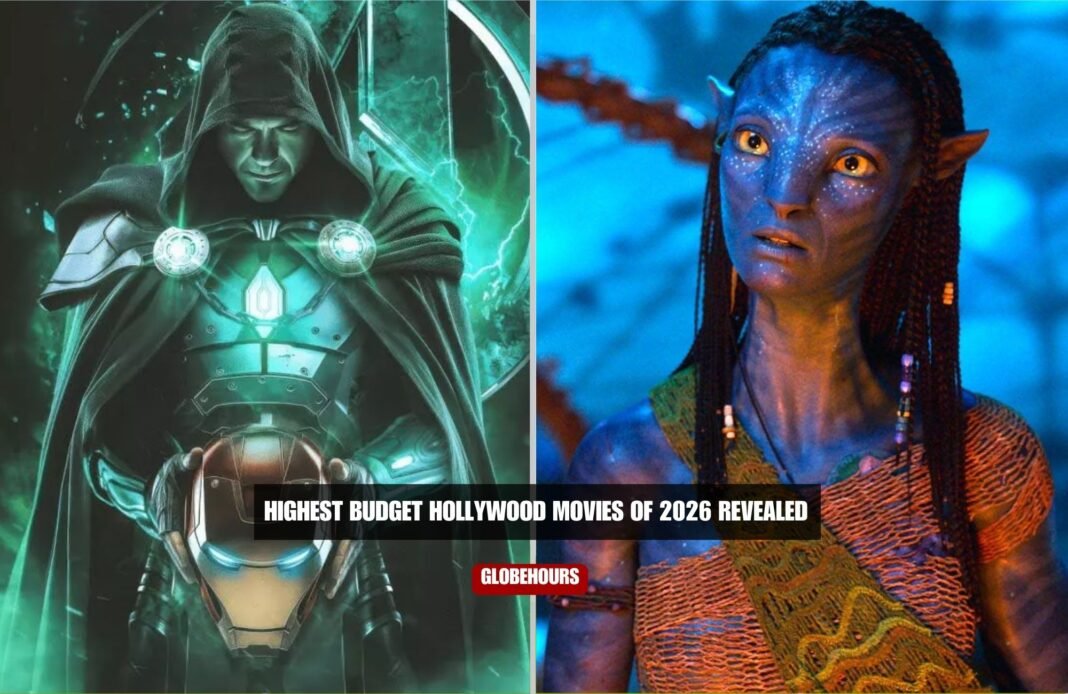
Avengers: Doomsday stands as potentially the most expensive film ever made, with pre-production budget estimates ranging from $500-600 million before marketing costs. Some industry insiders quoted in box office tracking forums suggest the total cost including marketing could approach $1 billion, which would make it approximately $200 million more expensive than Avengers: Endgame. The astronomical budget reflects several key factors: Robert Downey Jr.'s $50-80 million salary to return as Doctor Doom, massive ensemble cast salaries, the Russo Brothers' director fees following their Endgame success, extensive worldwide location shooting, and cutting-edge visual effects requiring thousands of VFX artists working across multiple studios for over 18 months.
The film's December 2026 release was pushed back from its original May date specifically to allow more time for production, which inevitably increases costs as crews remain on salary longer. Marvel Studios president Kevin Feige has reportedly been given unprecedented budgetary freedom by Disney after years of mixed Phase Four and Five receptions, with the studio betting that bringing back the Russo Brothers and RDJ will justify the expense. The break-even point is estimated at roughly $2 billion worldwide box office, meaning Doomsday needs to perform somewhere between Infinity War ($2.05B) and Endgame ($2.79B) just to be profitable. Industry analysts note that if the film underperforms, it could trigger a reevaluation of Marvel's entire production strategy. However, if it succeeds, it will validate the "spend whatever it takes" approach for major franchise tentpoles and likely lead to even bigger budgets for Avengers: Secret Wars in 2027.
💰 Budget Breakdown
2. Avatar: Fire and Ash 🔥
Avatar: Fire and Ash carries a production budget estimated between $400-460 million according to financial reports from New Zealand where much of the filming occurs. While this is actually slightly less expensive than Avatar: The Way of Water (which cost around $460 million), it still ranks among the most expensive films ever produced. The budget covers James Cameron's revolutionary performance capture technology, underwater filming sequences, extensive New Zealand location shooting, thousands of hours of motion capture work with actors like Sam Worthington and Zoe Saldaña, and the creation of entirely new Pandoran environments and ecosystems. Cameron shoots his Avatar sequels back-to-back to save on costs, meaning some of Fire and Ash's budget was shared with The Way of Water and the as-yet-untitled Avatar 4.
What makes the Avatar budgets particularly remarkable is that Cameron's films have consistently proven worth the investment—the first Avatar grossed $2.9 billion and reclaimed the all-time box office crown from Endgame, while The Way of Water earned $2.3 billion despite concerns about whether audiences still cared about Pandora. Fire and Ash explores the fire-wielding Ash People in volcanic regions of Pandora, requiring entirely new visual effects approaches and practical sets that can withstand both water and fire elements. The film's December 20 release positions it as both holiday blockbuster and major Oscar contender, with Disney betting that Cameron's track record justifies the massive investment. Industry observers note that at $400M+, Fire and Ash needs to gross at least $1.2 billion worldwide to break even, but given the franchise's history, it's likely to exceed $1.5-2 billion and prove yet again that James Cameron's expensive bets consistently pay off.
3. The Odyssey 🔥
Christopher Nolan's The Odyssey matches his previous budget record of $250 million set by The Dark Knight Rises, making it his most expensive film alongside that Batman conclusion. According to reports from World of Reel and industry insiders, Universal Pictures greenlit the massive budget after Oppenheimer's stunning success (grossing nearly $1 billion on a comparatively modest $100M budget). The Odyssey's costs reflect Nolan's insistence on shooting entirely on practical locations across the Mediterranean—including Greece, Italy, Morocco, and other countries—rather than using green screens or virtual production. The film employs thousands of extras for battle sequences, constructs real ships for ocean filming, and utilizes brand new IMAX 70mm film technology that Nolan helped develop specifically for this production.
The enormous ensemble cast adds tens of millions to the budget: Matt Damon, Zendaya, Tom Holland, Anne Hathaway, Robert Pattinson, Charlize Theron, Lupita Nyong'o, and Jon Bernthal all command substantial salaries, with Damon likely earning $15-20 million for the lead role. Nolan's own director fee and his requirement for extensive practical effects rather than CGI wherever possible further inflate costs. The film's 3+ hour runtime means more footage to shoot, edit, and perfect. At $250M production plus likely $100M+ marketing, The Odyssey needs to gross $800M-$1B worldwide to be profitable. Given Nolan's track record—even his more challenging films like Tenet and Dunkirk crossed $500M globally—and the massive anticipation for this project, Universal is confident it will justify the investment and potentially cross $1 billion, especially with strong word-of-mouth and Oscar campaigns driving repeat viewings.
4. Spider-Man: Brand New Day
Spider-Man: Brand New Day carries an estimated budget of $200-250 million, representing a significant increase from previous MCU Spider-Man films. Spider-Man: Homecoming cost $175M, Far From Home $160M, and No Way Home approximately $200M, making Brand New Day the most expensive solo Spider-Man film to date. The budget increase reflects several factors: Tom Holland's substantially higher salary following No Way Home's $1.9 billion success (he's reportedly earning $15-20 million plus backend points), extensive visual effects for Spider-Man's action sequences and web-slinging through New York City, location shooting in Scotland and England from August-December 2025, and the addition of high-profile cast members including Zendaya and newcomer Sadie Sink.
Director Destin Daniel Cretton's fee following Shang-Chi's success adds to costs, as does the film's position as the beginning of a new trilogy which requires establishing new story elements, villains, and potentially new superhero characters. Sony and Marvel's co-financing arrangement means both studios share the budget risk and rewards, but also means both want to ensure maximum production value to protect their investment. The film needs to gross approximately $600-750M worldwide to break even, which seems easily achievable given No Way Home's massive success. Industry projections suggest Brand New Day could gross $1-1.5 billion globally if it delivers on quality and emotional storytelling, making the $200-250M budget a calculated but safe bet on one of cinema's most profitable franchises.
5. Dune: Messiah
Dune: Messiah's budget is estimated at $190-220 million, slightly higher than Dune: Part Two's reported $190M budget but still remarkably cost-effective compared to other blockbusters of similar scale. Denis Villeneuve has proven masterful at creating epic spectacle while controlling costs through careful planning, efficient shooting schedules, and strategic use of practical effects combined with CGI. The budget covers extensive desert location shooting in Jordan and Abu Dhabi, elaborate set construction at Pinewood Studios, thousands of extras for crowd scenes depicting Paul Atreides's galactic jihad, and cutting-edge visual effects for sandworms, ornithopters, and the film's various planets and spacecraft.
Warner Bros. and Legendary Entertainment are co-financing the production, confident after Part Two's massive success ($714M worldwide plus six Academy Awards). Timothée Chalamet and Zendaya's increased salaries following their recent successes add to costs, as does Hans Zimmer's score which requires full orchestras and months of composition work. The 12-year time jump in the story requires aging makeup, potential recasting of younger characters, and depicting the consequences of Paul's rule across multiple worlds. At $190-220M, Messiah needs approximately $550-650M worldwide to be profitable, which seems easily achievable given Part Two's performance and the franchise's momentum. Warner Bros. is banking on Christmas Day positioning and awards campaigns to drive Messiah toward $700M-$1B globally, making it both profitable and a fitting conclusion to Villeneuve's critically acclaimed trilogy.
6. The Mandalorian and Grogu
The Mandalorian and Grogu's theatrical film carries an estimated budget of $150-180 million, representing a significant step up from the Disney+ series' per-episode costs (approximately $15M per episode, or $120M per season). The increased budget reflects theatrical expectations for bigger action sequences, more extensive location shooting beyond the StageCraft LED volume technology used for the series, higher-profile guest stars including Jeremy Allen White and Sigourney Weaver, and the need for more polished visual effects suitable for IMAX and premium large format screens. Jon Favreau's director fee for the theatrical film is substantially higher than his showrunner salary for the series, and Pedro Pascal's compensation reflects his star power growth since The Mandalorian first premiered.
The budget also covers John Williams' potential involvement for the score (if he contributes themes beyond Ludwig Göransson's work), practical creature effects for Grogu and other aliens that need to look photo-real on giant screens, and elaborate set construction for environments that can't be achieved with LED walls. At $150-180M, the film needs approximately $450-550M worldwide to be profitable, which Lucasfilm believes is easily achievable given The Mandalorian's massive popularity and the seven-year theatrical Star Wars drought. Industry tracking suggests it could gross $800M-$1.1B globally, making it one of 2026's biggest hits and potentially opening the door for other Disney+ Star Wars series to receive theatrical treatments. The investment represents Disney's confidence that Mando and Grogu are popular enough to justify theatrical budgets and can revitalize Star Wars' cinematic future after the mixed sequel trilogy reception.
7. Moana (Live-Action)
Disney's live-action Moana carries one of the studio's highest budgets for a reimagined animated classic, estimated at $200-250 million. The massive budget reflects the enormous technical challenges of recreating Moana's stunning oceanic animation in live-action: the sentient ocean that acts as a character requires cutting-edge VFX, Maui's shape-shifting abilities demand complex CGI transformations, and the Pacific Island settings required extensive location shooting in Polynesia combined with elaborate set construction. Dwayne "The Rock" Johnson commands a substantial salary (likely $20-25M plus backend) to reprise his Maui role in live-action, while newcomer Catherine Laga'aia playing Moana also receives significant compensation as the lead.
Director Thomas Kail's Hamilton experience brings theatrical production value expectations that increase costs, and Lin-Manuel Miranda's potential involvement (whether new songs or supervising his existing music in live-action) adds budget considerations. The film requires extensive water tank work for ocean sequences, practical boats and sets that can withstand water filming, and hundreds of extras for island village scenes. Advanced motion capture for Johnson's shape-shifting sequences, underwater filming technology, and the creation of CGI creatures like Tamatoa the crab all contribute to costs. At $200-250M, Moana needs $600-750M worldwide to break even, but Disney is confident given the original's enduring popularity ($690M globally) and Moana 2's record-breaking 2024 animated opening. The investment represents Disney's belief that their most culturally significant recent animated films deserve theatrical live-action treatments with no expense spared.
8. Jumanji 3
Jumanji 3 carries an estimated budget of $150-175 million, the highest of the rebooted trilogy following Welcome to the Jungle's $90-150M and The Next Level's estimated $125-150M. The budget increase reflects rising star salaries as Dwayne Johnson, Kevin Hart, Jack Black, and Karen Gillan all command significantly more after the franchise's success (the first two films grossed over $1.7 billion combined). Johnson alone likely earns $20-25 million plus substantial backend participation, while Hart commands $15-20M. The ensemble's chemistry justifies the expense, but their combined salaries consume a substantial portion of the budget before a single frame is shot.
The budget also covers elaborate action sequences set in various video game environments, extensive visual effects for the game world's fantastical elements, exotic location shooting for jungle and adventure sequences, and advanced motion capture or CGI for creatures and obstacles the characters face. Jake Kasdan's director fee has increased following the franchise's success, and Sony is betting bigger action set pieces and more elaborate production design will justify the trilogy's conclusion as "the biggest yet." At $150-175M, Jumanji 3 needs approximately $450-525M worldwide to be profitable, which seems easily achievable given the franchise's track record. Sony is banking on the December release date, holiday family audiences, and the cast's proven chemistry to drive it toward $700M-$900M globally, making the investment a safe bet on one of their most reliable franchises.
9. Toy Story 5
Toy Story 5's estimated budget of $175-200 million makes it one of Pixar's most expensive productions, continuing the trend of increasing costs for major animated features. For comparison, Toy Story 3 cost approximately $200M (2010 dollars), while Toy Story 4 came in around $200M. The budget reflects the incredibly detailed computer animation required for Pixar's signature photo-realistic textures, lighting, and character movements that have become more sophisticated with each installment. Creating believable toy characters that move through realistic environments while maintaining their "toy-like" qualities requires thousands of hours of animation work from hundreds of artists across multiple years.
Voice actor salaries for Tom Hanks and Tim Allen have increased substantially since the franchise began—Hanks reportedly earned $10-15M for Toy Story 4 and likely commands similar or higher for this installment. Director Andrew Stanton's fee reflects his status as a Pixar legend who directed Wall-E and Finding Nemo. The film's premise tackling digital toys versus physical toys requires creating CGI representations of tablets and digital worlds within the already-CGI film, adding technical complexity. Randy Newman's score, if he returns, adds costs for orchestral recording sessions. At $175-200M, Toy Story 5 needs approximately $525-600M worldwide to be profitable, which seems conservative given Toy Story 3 grossed $1.07B and Toy Story 4 earned $1.07B. Disney is confident the franchise's emotional resonance and Pixar's storytelling reputation justify the investment and that Toy Story 5 will likely gross $800M-$1B+ globally.
10. Project Hail Mary
Project Hail Mary carries an estimated budget of $125-150 million for this space-set sci-fi adaptation of Andy Weir's bestselling novel. The budget reflects the challenges of depicting interstellar space travel, alien environments, and first contact with extraterrestrial life—all requiring extensive visual effects work. Ryan Gosling commands a significant salary (likely $15-20M) following his Barbie and recent successes, while directors Phil Lord and Christopher Miller's fees have increased substantially after Spider-Verse's cultural impact. The film requires creating zero-gravity environments, alien spaceships, the journey through space to Tau Ceti, and most importantly, the design and animation of the alien character Rocky who becomes central to the story's emotional core.
Unlike The Martian which mostly took place on Mars sets, Project Hail Mary requires depicting multiple planets, spacecraft interiors, and space sequences that can't rely on practical effects. The budget also covers Sandra Hüller and other supporting cast members, location shooting for Earth-based flashback sequences, and extensive pre-visualization work to plan complex VFX shots. Amazon MGM Studios is betting that combining Weir's proven track record (The Martian grossed $630M worldwide), Gosling's star power, Lord & Miller's creative vision, and a story with broad appeal will justify the expense. At $125-150M, the film needs approximately $375-450M worldwide to be profitable. Industry projections suggest it could reach $400-600M globally with strong reviews and word-of-mouth, making it a calculated mid-budget bet compared to the other mega-budget tentpoles dominating 2026.