Table of Contents
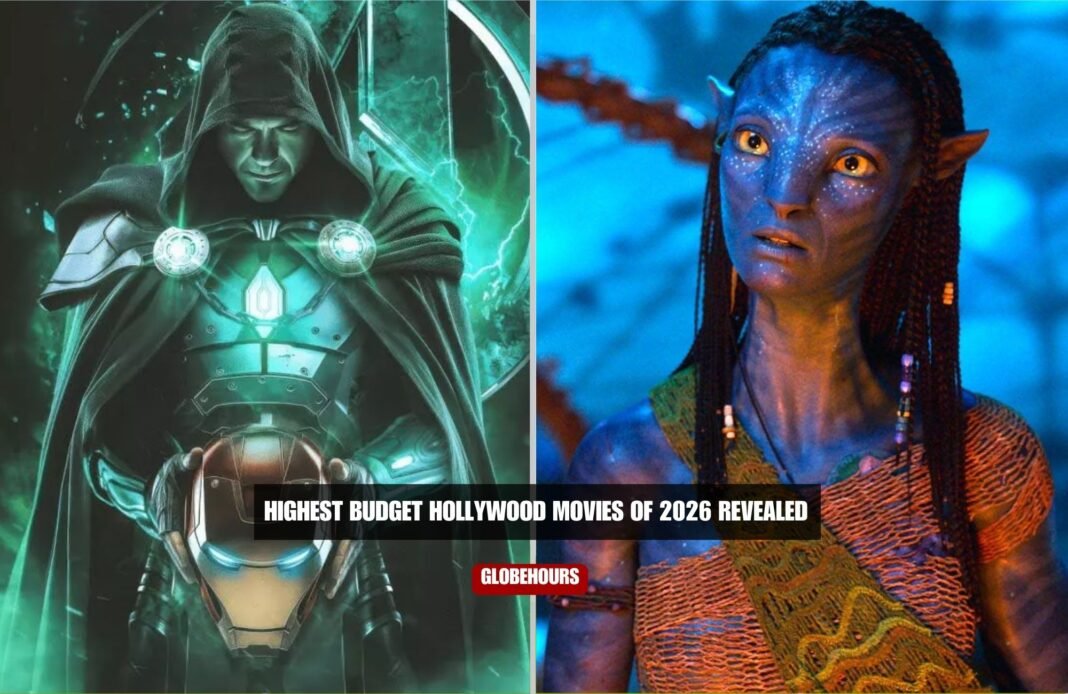
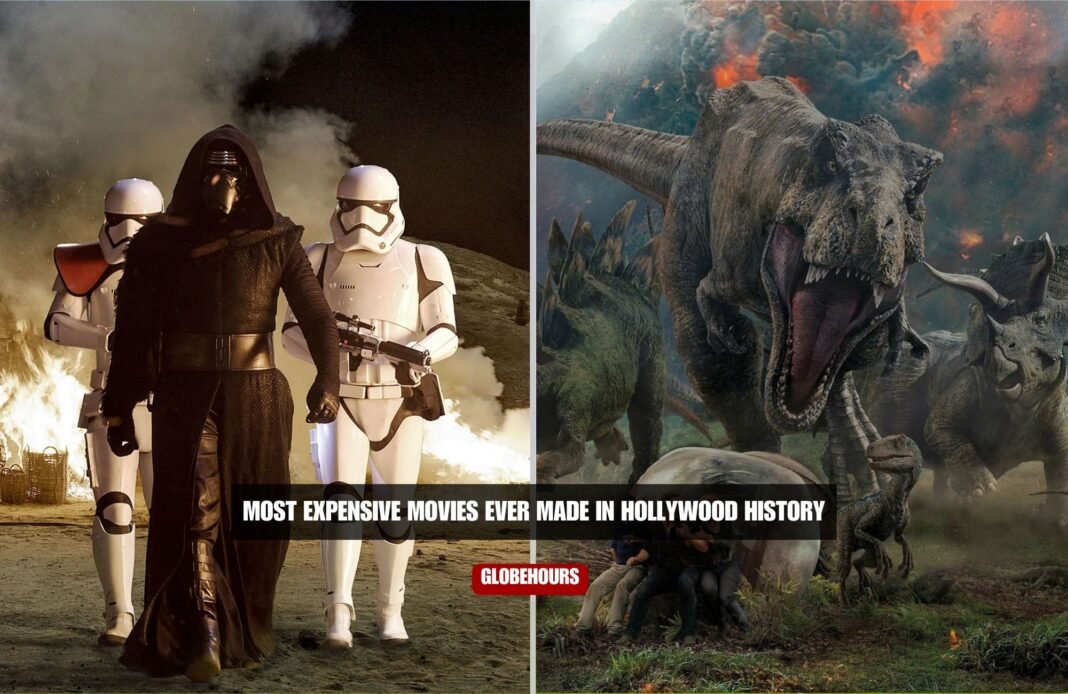
ToggleMost Expensive Movies Ever Made in Hollywood History: Hollywood has entered an era of unprecedented spending, with production budgets for blockbuster films reaching astronomical heights that would have been unimaginable just two decades ago. Star Wars: The Force Awakens holds the crown as the most expensive movie ever made with a staggering $447 million budget, followed closely by Jurassic World: Fallen Kingdom at $432 million and Star Wars: The Rise of Skywalker at $416 million. These massive investments reflect the modern film industry's belief that spectacular visual effects, A-list star power, and franchise brand recognition can generate billions in box office returns. For those interested in exploring more about Hollywood movies of 2026 and future blockbusters, these historic productions set the standard for what studios are willing to spend to capture global audiences.
What makes these productions so expensive involves multiple factors: cutting-edge visual effects that require thousands of artists working for 12-18 months, star salaries exceeding $20 million per actor, extensive location shooting across multiple countries, elaborate practical sets and props, advanced camera technology like IMAX 70mm, months-long post-production periods, and massive marketing campaigns. According to The Numbers and industry sources, the top 10 most expensive films ever made have collectively cost over $3.9 billion to produce, not including marketing expenses which can add another 50-100% to each film's total cost. These budget-breaking productions have delivered mixed financial results—some became all-time box office champions while others lost hundreds of millions, proving that bigger budgets don't always guarantee success.
1. Star Wars: The Force Awakens 🏆
Star Wars: The Force Awakens holds the record as the most expensive movie ever produced, with a production budget reaching $447 million according to financial disclosures from Disney. This seventh installment in the Star Wars saga marked the franchise's return after a decade-long hiatus, with Disney sparing no expense to ensure it would meet astronomical fan expectations. The production strategically chose Pinewood Studios in the UK to leverage the Film Tax Relief scheme offering up to 25% reimbursement on production costs, which provided approximately $103.4 million in tax credits. Even after rebates, the net spending reached $535.5 million when including all production elements.
The massive budget covered extensive practical effects and real locations that J.J. Abrams insisted upon to distinguish it from the prequel trilogy's heavy CGI reliance. The production employed 258 staff members at its peak with total salaries exceeding $21.5 million, built massive practical sets including Millennium Falcon interiors and desert outposts, filmed in locations across Abu Dhabi, Iceland, and Ireland, and utilized state-of-the-art motion capture for characters like Supreme Leader Snoke. Despite the record-breaking budget, The Force Awakens proved a massive financial success, grossing over $2.068 billion worldwide and becoming the highest-grossing film of 2015. The film's profitability vindicated Disney's expensive gamble and demonstrated that audiences would enthusiastically return to the Star Wars universe with proper investment in production quality and nostalgia-driven storytelling.
💰 Budget Breakdown
2. Jurassic World: Fallen Kingdom 🦖
Jurassic World: Fallen Kingdom stands as the second most expensive film ever made with a production budget of $432 million, representing a significant increase from the first Jurassic World's $150 million cost. Director J.A. Bayona's sequel continued the franchise's legacy of pushing technological boundaries in filmmaking, requiring extensive CGI work to create photo-realistic dinosaurs that interact seamlessly with actors and environments. The production featured elaborate practical sets including the collapsing Lockwood Estate mansion, volcanic eruption sequences filmed in Hawaii, and underwater dinosaur scenes that demanded specialized equipment and months of post-production work.
The budget covered Chris Pratt and Bryce Dallas Howard's substantially increased salaries following the first film's $1.67 billion success, thousands of visual effects shots created by Industrial Light & Magic over 18 months, location shooting across Hawaii, England's Pinewood Studios, and various European locations, and extensive motion capture work for dinosaur movements and behaviors. Despite being one of cinema's most expensive productions, Fallen Kingdom grossed $1.310 billion worldwide, making it 2018's second-highest grossing film. While profitable, the film's critical reception was mixed, with some reviewers questioning whether the enormous budget produced proportionate entertainment value. The production demonstrated that Jurassic franchise's brand power remained strong enough to justify nine-figure budgets even when critical reception was lukewarm.
3. Star Wars: The Rise of Skywalker ⭐
Star Wars: The Rise of Skywalker's $416 million production budget made it the third most expensive film in history and reflected the enormous challenges of concluding a saga that had captivated audiences for over four decades. The film faced unique production difficulties including director Colin Trevorrow's departure and replacement by J.J. Abrams, the need to write Carrie Fisher's character out following her death while still honoring her legacy using unused footage, and fan backlash against The Last Jedi that created pressure to satisfy divided fanbase expectations. These complications resulted in extensive reshoots, script rewrites, and prolonged post-production that inflated costs significantly beyond initial projections.
The massive budget covered the largest space battle ever created for Star Wars requiring thousands of CGI ships and fighters, elaborate practical sets for Emperor Palpatine's Sith throne room and the desert planet Pasaana, location filming across Jordan, England, and various studios worldwide, and complex visual effects for Force lightning, lightsaber duels, and the climactic fleet battle above Exegol. John Williams' final Star Wars score required expensive orchestral recording sessions befitting the saga's conclusion. Despite the enormous investment and extensive marketing, The Rise of Skywalker became the lowest-grossing film of the sequel trilogy with $1.074 billion—still profitable but below Disney's expectations. The production demonstrated that even beloved franchises aren't immune to budget inflation when creative difficulties and production challenges compound. The film's divisive fan reception sparked debates about whether bigger budgets necessarily improve storytelling, with many arguing the original trilogy achieved more with far less.
4. Pirates of the Caribbean: On Stranger Tides 🏴☠️
Pirates of the Caribbean: On Stranger Tides held the record as the most expensive film ever made for several years with its $410.6 million production budget, though adjusted for inflation it cost significantly more. The fourth installment in Disney's pirate franchise saw costs spiral due to multiple factors: Johnny Depp's salary reportedly reached $55 million making him one of the highest-paid actors ever for a single film, extensive location shooting across Hawaii, California, Puerto Rico, and the UK required transporting massive crews and equipment, and the production built elaborate practical ship sets including full-scale vessels that could rock and move to simulate ocean conditions.
Director Rob Marshall's vision demanded expensive 3D photography using cutting-edge camera systems, thousands of CGI shots for mermaids, the Fountain of Youth, and supernatural elements, months of water tank work for underwater sequences, and elaborate costume design and set decoration for 18th-century period accuracy. The budget also covered Penélope Cruz and Ian McShane's substantial salaries and extensive post-production work. Despite the astronomical costs, On Stranger Tides grossed over $1.046 billion worldwide, proving profitable though it received the franchise's weakest critical reviews with just 32% on Rotten Tomatoes. The film demonstrated that Pirates franchise's global appeal—particularly in international markets—could still justify massive budgets even without the supporting cast that made the original trilogy beloved. However, the production's extravagant spending sparked industry discussions about whether costs were spiraling out of control and if such budgets were sustainable long-term.
5. Mission: Impossible - The Final Reckoning 🎬
Mission: Impossible - The Final Reckoning joined the exclusive $400 million club as the franchise's most expensive entry and Tom Cruise's commitment to performing real stunts at age 62 pushed production costs to unprecedented levels. The film's budget reflected Cruise's insistence on practical stuntwork rather than CGI, including death-defying sequences like motorcycle jumps off Norwegian cliffs, airplane stunts, and high-speed car chases through European cities. These practical stunts require extensive safety preparation, multiple cameras, insurance costs, and numerous takes to capture perfectly, making them far more expensive than CGI alternatives.
The production covered Tom Cruise's substantial salary plus backend participation likely totaling $50-75 million, months of location shooting across Norway, South Africa, England, and other international locations, cutting-edge IMAX camera technology for maximum image quality, and elaborate set pieces including a crashing submarine and collapsing bridge sequences. Director Christopher McQuarrie's perfectionism meant extended shooting schedules and numerous reshoots to achieve his vision. The film opened to $77.5 million domestically over Memorial Day weekend, setting a holiday record, and ultimately grossed $514 million worldwide. While profitable, the results suggest even Tom Cruise's star power and the franchise's reputation for spectacular stunts may not fully justify $400 million budgets, raising questions about whether Mission: Impossible future entries will scale back spending or if this represents the new normal for action franchises.
6. Avatar: The Way of Water 🌊
Avatar: The Way of Water's production budget is estimated between $350-460 million, with the variance due to James Cameron shooting multiple Avatar sequels simultaneously and sharing costs across films. This long-awaited sequel to 2009's Avatar required revolutionary underwater performance capture technology that Cameron and his team spent years developing specifically for this production. The film's underwater sequences featuring the ocean-dwelling Metkayina clan demanded entirely new filming techniques, specialized water tanks, and motion capture systems that could function underwater—technology that didn't exist when production began.
The massive budget covered years of research and development for underwater motion capture, elaborate practical sets and water tanks built in New Zealand, thousands of hours of performance capture work with actors like Sam Worthington, Zoe Saldaña, and Kate Winslet, cutting-edge visual effects creating photo-realistic Na'vi characters and Pandora's oceans, and extensive post-production requiring multiple years of work. Cameron's perfectionism meant the film remained in production for years beyond initial projections, with visual effects teams working until weeks before release. The investment proved worthwhile as The Way of Water grossed $2.320 billion worldwide, becoming the third-highest grossing film of all time behind only Avatar and Avengers: Endgame. The success vindicated Cameron's expensive approach and demonstrated that audiences would wait 13 years and pay premium prices to return to Pandora if the quality justified the wait. The film proved that James Cameron remains one of the few directors whose ambitious vision can command $400M+ budgets and deliver proportionate box office returns.
7. Indiana Jones and the Dial of Destiny 🗿
Indiana Jones and the Dial of Destiny's $387.2 million budget exceeded the combined costs of the franchise's previous four films, making it one of the most expensive productions in history and unfortunately one of the biggest box office disappointments. The fifth and reportedly final Indiana Jones film faced the challenge of bringing back Harrison Ford at age 80 to play the iconic archaeologist one last time, requiring expensive de-aging CGI for flashback sequences set during World War II. The technology used to make Ford appear 40 years younger in the opening sequence reportedly cost tens of millions alone and required months of intensive visual effects work.
The budget covered Harrison Ford's salary likely exceeding $25 million for his farewell performance, extensive location shooting across Morocco, Sicily, Scotland, and England, elaborate practical sets recreating 1960s New York City and ancient historical sites, thousands of CGI shots for action sequences and historical recreation, and director James Mangold's fee following his Logan success. Disney spared no expense hoping to give the beloved franchise a worthy send-off, but the results proved disastrous. The film grossed only $384 million worldwide—barely recovering its production budget before marketing costs—and became one of 2023's biggest financial failures. The disappointing performance sparked industry discussions about whether aging franchises and de-aging technology justify such enormous budgets, with many concluding that nostalgia alone can't overcome weak storytelling. The Dial of Destiny's failure demonstrated that even legendary IPs aren't immune to budget inflation consequences when audiences reject the final product, serving as a cautionary tale about the risks of mega-budget legacy sequels.
8. Fast X 🏎️
Fast X's production budget ballooned to $379 million due to extensive production troubles that plagued the tenth installment of the Fast & Furious franchise. The film faced unique challenges including director Justin Lin's departure mid-production after filming had already begun, requiring replacement director Louis Leterrier to reshoot substantial portions while maintaining the existing footage. This director change meant paying two directors, rebuilding sets, and extending production timelines that kept expensive cast and crew on salary for additional months. The franchise's commitment to practical stunts and real car chases rather than CGI added tens of millions to costs as production destroyed hundreds of vehicles and required extensive safety measures.
The budget covered Vin Diesel's massive salary and producer fees likely totaling $20-30 million, the sprawling ensemble cast including returning favorites and newcomers like Jason Momoa whose salaries collectively exceeded $50 million, elaborate action sequences filmed across Portugal, Italy, Brazil, England, and Los Angeles, hundreds of destroyed vehicles including supercars, muscle cars, and specialty vehicles, and extensive CGI work for physics-defying car stunts and explosions. Fast X grossed $704 million worldwide—profitable but below expectations for a franchise whose previous entries exceeded $1 billion. The production troubles and inflated budget sparked discussions about whether the Fast & Furious saga had become too expensive and complicated, with some industry analysts suggesting that Universal should scale back future entries' budgets or risk diminishing returns as audience interest potentially wanes after a decade-plus of increasingly outlandish stunts.
9. Avengers: Age of Ultron 🦾
Avengers: Age of Ultron's $365 million production budget made it one of the most expensive films ever made at its 2015 release and reflected Marvel Studios' confidence following the first Avengers' massive success. The sequel required significantly more visual effects work than its predecessor, with thousands of CGI shots creating the villainous Ultron (performed by James Spader via motion capture), the Battle of Sokovia featuring an entire city being lifted into the sky, elaborate action sequences in South Korea and Eastern Europe, and the introduction of new heroes like Vision, Scarlet Witch, and Quicksilver who required extensive CGI for their superpowers.
The budget covered Robert Downey Jr.'s increased salary following Iron Man 3's success (reportedly $40-50 million), the rest of the ensemble cast including Chris Evans, Chris Hemsworth, Scarlett Johansson, and Mark Ruffalo whose salaries had grown substantially, location shooting across Italy, South Korea, South Africa, and England, elaborate practical sets for Avengers Tower and the Hydra facility, and months of post-production visual effects work. Director Joss Whedon's fee also increased significantly following the first film's $1.5 billion success. Age of Ultron grossed $1.403 billion worldwide, making it 2015's second-highest grossing film and highly profitable despite the massive budget. However, the production proved exhausting for Whedon who later departed the MCU citing creative differences and studio pressure. The film demonstrated that Marvel could justify increasingly massive budgets for Avengers films, setting the stage for even more expensive Infinity War and Endgame productions that followed.
10. Avengers: Endgame 💎
Avengers: Endgame's production budget is estimated between $356-400 million (the variance due to some sources combining it with Infinity War's costs since they were filmed back-to-back), making it one of the ten most expensive films ever produced and representing the culmination of the MCU's first decade. The film made history as the first Hollywood movie shot entirely with IMAX digital cameras, requiring specialized equipment and technical expertise that added significant costs. The Russo Brothers' ambitious vision demanded elaborate practical sets for Avengers headquarters, the time heist sequences revisiting previous MCU films, and the climactic battle featuring virtually every MCU character ever introduced.
The budget covered Robert Downey Jr.'s massive salary and backend deal that eventually totaled over $75 million, the enormous ensemble cast featuring dozens of A-list actors all commanding substantial fees, thousands of CGI shots for the final battle featuring armies of heroes fighting Thanos's forces, extensive reshoots to perfect the film's emotional moments and pacing, and months of intensive post-production work. The production filmed back-to-back with Infinity War to save on costs, allowing Marvel to spread expenses across two films while keeping actors on salary continuously. Endgame became the highest-grossing film of all time with $2.799 billion worldwide (later surpassed by Avatar's re-release), vindicating every dollar spent and proving that mega-budgets can generate proportionate returns when the story, characters, and execution justify audience investment. The film's success demonstrated that the MCU had achieved what no franchise before had—maintaining quality and audience enthusiasm across 22 interconnected films spanning a decade. Endgame's financial triumph gave studios confidence to pursue even bigger budgets for future tentpole releases, directly contributing to the escalating production costs seen in subsequent years.