Table of Contents
ToggleSchindler's List Review
Steven Spielberg's Unforgettable Holocaust Masterpiece
Schindler's List Review - Steven Spielberg's 1993 masterpiece remains cinema's most powerful Holocaust film. This isn't entertainment. It's a profound historical document that demands to be witnessed.
Liam Neeson delivers a career-defining performance as Oskar Schindler. The film earned 98% on Rotten Tomatoes and won seven Academy Awards including Best Picture and Best Director.
Shot entirely in black and white, the film chronicles how a Nazi businessman saved over 1,100 Jews. It's widely considered one of the greatest films ever made and essential viewing for understanding humanity's darkest chapter.
| Movie Details | Information |
|---|---|
| Director | Steven Spielberg |
| Release Date | December 15, 1993 |
| Rating | R |
| Genre | Biography / Drama / History |
| Runtime | 3 hours 15 minutes |
| Budget | $22 Million |
| Box Office | $322 Million |
| IMDb Rating | 9.0/10 |
| Rotten Tomatoes | 98% Critics / 97% Audience |
| Oscar Wins | 7 (Best Picture, Best Director, Best Adapted Screenplay) |
📖 Plot Synopsis
September 1939. Nazi Germany invades Poland and World War II begins. The Polish Jews are forced into the overcrowded Kraków Ghetto under brutal occupation.
Oskar Schindler arrives in Kraków seeking fortune from wartime opportunities. He's a member of the Nazi Party but motivated purely by profit. He bribes Wehrmacht and SS officials to gain favor.
Stern begins hiring Jews to work at the factory. He saves people by listing them as essential skilled workers. The factory becomes a refuge from the increasingly brutal Nazi persecution.
Schindler enjoys lavish parties and develops contacts with Nazi officials. He's a womanizer and opportunist interested only in wealth. The human cost of war doesn't initially concern him.
March 1943 brings the horrific liquidation of the Kraków Ghetto. SS forces shoot people in the streets and drag families from homes. Children hide desperately while soldiers hunt them down.
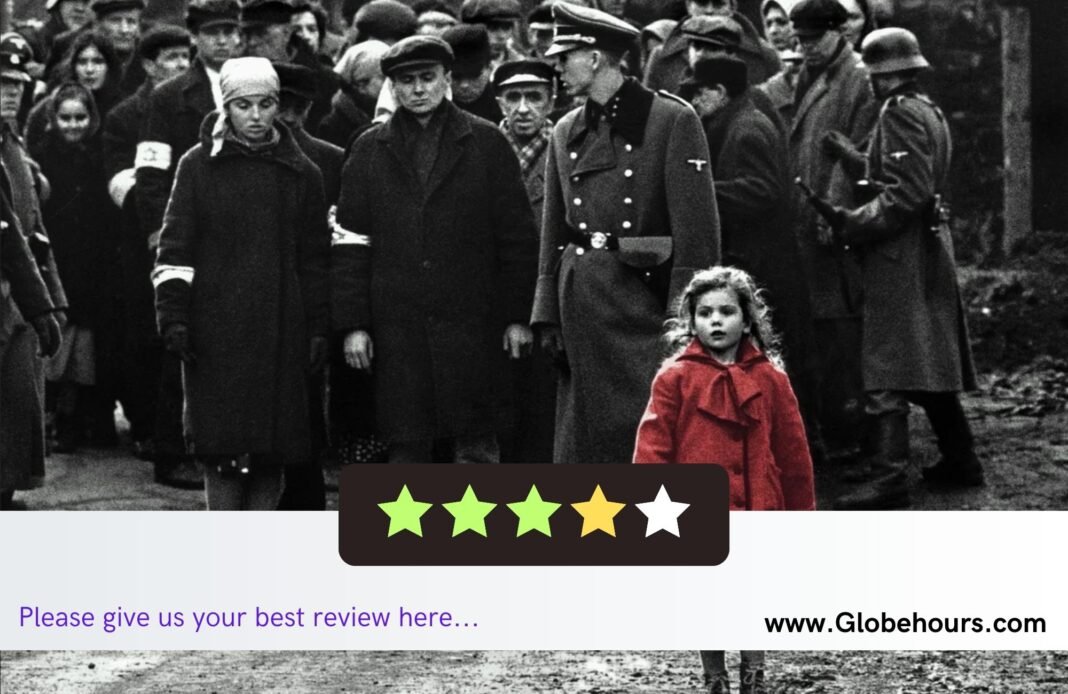
From a hilltop, Schindler witnesses the massacre's full horror. He sees a young girl in a red coat wandering alone through the chaos. This moment profoundly affects his conscience.
The surviving Jews are sent to Plaszów labor camp. The kommandant is Amon Göth, a sadistic SS officer. He randomly shoots prisoners from his villa balcony for sport.
Göth brutalizes his Jewish maid Helen Hirsch with psychological torture. Prisoners live in constant terror of his unpredictable violence. Death comes arbitrarily and without reason.
Schindler cultivates a friendship with Göth through bribes and shared drinks. He uses this relationship to protect his workers. His motivation slowly shifts from profit to saving lives.
Schindler sees the girl in the red coat again. Her body lies on a wagon carrying corpses to be burned. The image destroys any remaining moral ambiguity about Nazi actions.
He convinces Göth to let him build a sub-camp at his factory. Workers can live there under less brutal conditions. Schindler pays massive bribes to make this happen.
Germany begins losing the war badly by late 1944. Göth receives orders to close Plaszów and send prisoners to Auschwitz. This means certain death in the gas chambers.
Schindler decides to spend his entire fortune saving Jews. He tells Göth he wants to open a munitions factory in Brünnlitz, Czechoslovakia. He'll need workers transferred there instead of Auschwitz.
Schindler and Stern compile a list of over 1,100 names. Being on this list means life instead of death. Göth charges enormous bribes for each person.
Schindler plays cards with Göth to win Helen Hirsch's life. He includes her on the list along with families and children. Every name represents someone who will survive.
The trains depart but a clerical error sends the women to Auschwitz. They're stripped naked and herded into what they believe is a gas chamber. Water falls from the showers instead of poison.
Schindler rushes to Auschwitz with diamonds to bribe the kommandant. He retrieves the women just before their execution. SS officers try to prevent children from leaving but Schindler intervenes successfully.
At the Brünnlitz factory, Schindler forbids SS guards from entering production areas. He encourages Jews to observe the Sabbath. The factory deliberately produces no usable ammunition for seven months.
Schindler spends his fortune buying defective shells from other manufacturers. He passes them off as his own production. Not a single bullet from his factory works properly.
May 1945 brings Germany's surrender and the war's end. Schindler must flee as a Nazi Party member and war profiteer. He faces arrest or execution by advancing Soviet forces.
His workers present him with a signed letter explaining his actions. They give him a ring engraved with "Whoever saves one life saves the world entire" from the Talmud.
Schindler breaks down crying. He laments not selling his car to save more people. He regrets not doing more despite bankrupting himself. The workers comfort him before he flees.
A Soviet officer arrives the next morning announcing liberation. He warns the Jews not to go east because of continuing antisemitism. The Schindlerjuden walk together into freedom.
The film ends in color at Schindler's grave in Jerusalem. Actual survivors he saved place stones on his tombstone. They're accompanied by the actors who portrayed them.
🎬 Schindler's List Review: Cinematic Perfection
Spielberg's direction achieves devastating emotional power without manipulation. The black and white cinematography creates documentary realism. Every frame feels historically authentic and vital.
Janusz Kamiński's cinematography captures both beauty and horror. The girl in the red coat provides the film's only color. This visual choice creates unforgettable symbolic impact.
John Williams composed a haunting violin-based score. Itzhak Perlman's performance conveys indescribable sorrow. The music mourns without overwhelming the images.
Steven Zaillian's screenplay balances intimate moments with historical scope. Characters feel fully human despite depicting real people. The script never exploits suffering for dramatic effect.
Masterful Direction Black & White Cinematography John Williams Score🎭 Iconic Performances
- Liam Neeson (Oskar Schindler) - Career-defining portrayal of moral transformation from profiteer to savior
- Ben Kingsley (Itzhak Stern) - Quietly powerful as Schindler's conscience and co-conspirator
- Ralph Fiennes (Amon Göth) - Terrifyingly human depiction of pure evil and casual cruelty
- Caroline Goodall (Emilie Schindler) - Brings dignity to Schindler's neglected but supportive wife
- Embeth Davidtz (Helen Hirsch) - Heartbreaking portrayal of psychological torture victim
- Jonathan Sagall (Poldek Pfefferberg) - Represents the desperate will to survive
💭 Themes in Our Schindler's List Review
Moral Awakening: Schindler transforms from selfish businessman to selfless hero. His journey shows how witnessing atrocity can shatter moral indifference. Good and evil aren't fixed but chosen through actions.
The Banality of Evil: Göth represents how ordinary people commit extraordinary horrors. He drinks, jokes, and loves while casually murdering innocents. The film examines how systems enable individual cruelty.
Power of One: A single person's actions can save many lives. Schindler's list proves individual resistance matters. The film celebrates moral courage against overwhelming evil.
Bearing Witness: Spielberg documents the Holocaust so future generations remember. The film itself becomes testimony. Forgetting history risks repeating it.
Humanity in Darkness: Even in hell, people maintain dignity and hope. Small acts of kindness matter profoundly. The film finds light without minimizing darkness.
Moral Responsibility Historical Memory Human Resilience Redemption✓ Strengths & Weaknesses
✓ What Works
- Liam Neeson's transformative central performance
- Ralph Fiennes creates genuinely terrifying villain
- Black and white photography achieves documentary realism
- Girl in red coat provides devastating symbolism
- John Williams' haunting musical score
- Historically accurate without sacrificing emotion
- Never exploits suffering for entertainment
- Ben Kingsley grounds film with quiet power
- Emotional climax earns its devastating impact
- Ending with real survivors creates profound connection
✗ Minor Issues
- Three hour runtime challenges some viewers
- Extremely difficult subject matter not for everyone
- Some scenes may traumatize sensitive audiences
- Graphic violence though historically necessary
- Emotional weight can feel overwhelming
🎯 Final Schindler's List Review Verdict
Schindler's List stands as cinema's definitive Holocaust film. Spielberg created a work of profound historical importance that never sacrifices artistic excellence. Every element serves the story's moral urgency.
This isn't a movie you enjoy but one you must experience. It documents humanity's capacity for both unspeakable evil and extraordinary courage. The film demands witness and remembrance.
Schindler's List is more than a masterpiece - it's essential viewing for anyone seeking to understand history and humanity.
❓ Frequently Asked Questions
🎥 Where to Watch Schindler's List
Stream or rent this essential Holocaust masterpiece:
Watch on Amazon Prime Watch on Apple TV Stream on Netflix View on IMDb

